

What if the advertised fiber rate is only one piece of the bill? It’s easy to see a monthly price and still wonder what you’ll actually owe. A clear fiber internet cost per month breakdown separates the recurring service charge from equipment, installation, taxes, promotional changes, and other possible costs.
You’re right to look beyond the headline rate. A one-time installation charge isn’t the same as a monthly fee, and an introductory offer can make two plans look more alike than they are. Compare them using the same terms: what repeats each month, what is temporary, and what may change later.
This guide explains the charges that can appear on a fiber bill and how to distinguish recurring costs from one-time expenses. You’ll also learn how promotional terms affect comparisons and how to review current AT&T Fiber offers and check availability for your address. Use the steps below to assess the bill, not just the advertised rate.
Key Takeaways
- Use a fiber internet cost per month breakdown to separate the recurring service rate from possible fees, credits, and one-time charges.
- Compare plans using the same speed tier and note how long any promotional rate lasts.
- Audit an estimate or bill by recording the service rate, discounts, equipment, installation, and applicable taxes.
- Check AT&T Fiber availability and current offer details for your address before weighing the monthly cost.
- Use a consistent bill checklist to compare costs and spot charges that may change over time.
What Does Fiber Internet Cost Per Month Include? Start With the Full Bill
A useful fiber internet cost per month breakdown starts with the recurring service charge, adds any applicable recurring fees and taxes, and subtracts discounts or credits shown for that billing period. The advertised rate is a starting point, not necessarily the amount due on every statement. Equipment, installation, and promotional credits can be treated differently depending on the plan, offer, address, and account.
Think of the bill as a snapshot of a specific billing period. It reflects the service and account details in effect at that time, while an advertised rate may describe a plan or promotion under stated conditions. A one-time installation charge, for example, shouldn’t be mistaken for a monthly charge. A credit can reduce the amount due temporarily without changing the plan’s ongoing service rate.
Fiber availability and installation can also depend on how the network reaches a location. Fiber to the x (FTTX) architectures describes different approaches to bringing fiber closer to or directly to a customer. For your bill, the practical point is that the address and service setup matter. A general estimate can’t show every detail of a specific order.
Advertised rate versus amount due
A promotional headline may apply only for a stated period or under particular offer conditions. The regular service charge, a temporary discount, and a one-time credit are separate parts of the calculation. Review the offer details and order summary to see which amount repeats, which adjustment is temporary, and when the promotion applies. For a fair comparison, use the same service period and offer conditions rather than comparing headline rates alone.
Then match the billing dates. If two estimates cover different periods or show discounts at different stages, their totals may not be directly comparable. Keep the recurring service charge visible in your notes, even when a credit lowers the amount due. That makes it easier to understand the bill when a promotion or adjustment changes.
Which details can change a fiber bill?
The selected plan tier, address eligibility, and current offer terms can affect the service charge and available discounts. Equipment and installation treatment also depends on the specific offer. Taxes may apply, and their treatment can vary. Don’t assume every plan includes equipment or installation, or that every account has the same taxes or fees. Check the current plan details and itemized estimate for your address.
- Service: Record the selected tier and recurring service charge.
- Offer: Note the discount, its conditions, and how long it applies.
- Other items: List applicable recurring charges, taxes, credits, and one-time costs separately.
This gives you a clean starting point: separate what repeats from what’s temporary or one-time. Next, use that framework to read individual bill lines without treating every charge as part of the monthly plan rate.
Fiber Internet Bill Breakdown: Recurring Charges, Fees, and One-Time Costs
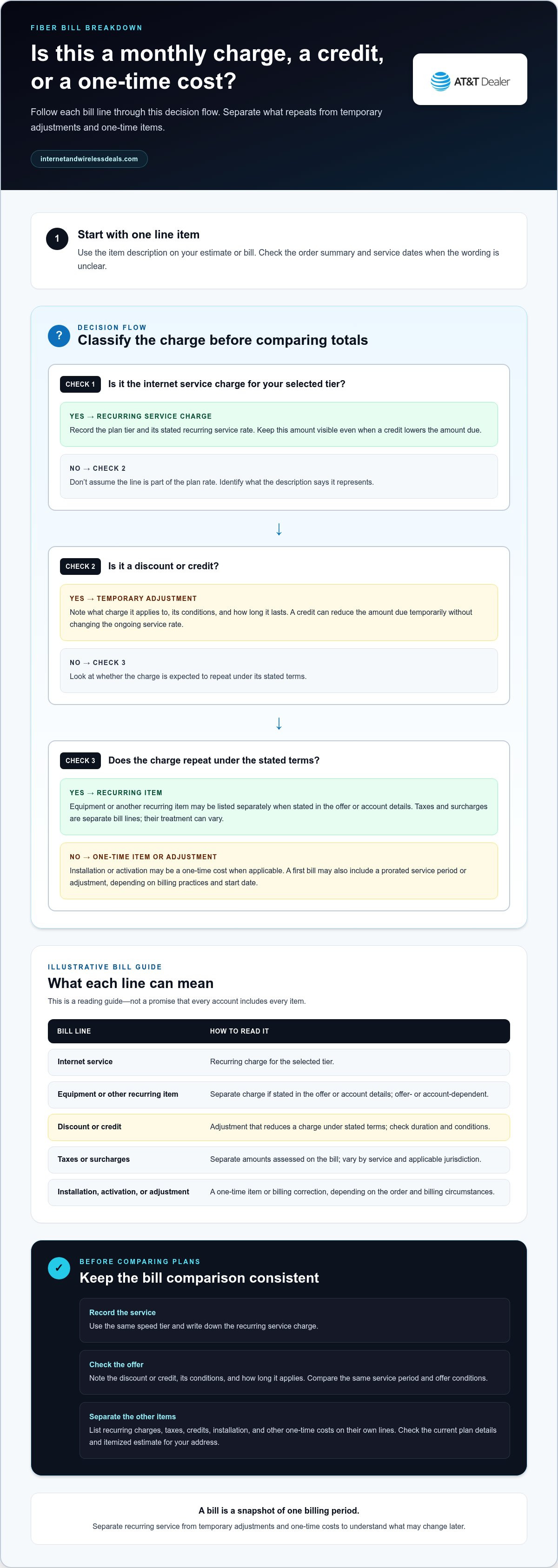
A clear fiber internet cost per month breakdown puts every bill line into context. Separate amounts that repeat from temporary credits and one-time items. Not every fiber plan has the same charges. The current offer and account details affect what appears on a bill.
Use this illustrative layout as a reading guide, not a promise that every account will include every line. Taxes and surcharges can vary by provider, service, and applicable jurisdiction. For broader consumer guidance on broadband service and bills, see the FCC guide to understanding broadband bills.
Illustrative bill line | How to read it | When it may apply
Internet service | Recurring charge for the selected tier | Appears as the service charge for the plan
Equipment or other recurring item | Separate charge if stated in the offer or account details | Offer-dependent or account-dependent
Discount or credit | Adjustment that reduces a charge under stated terms | Offer-dependent; check duration and conditions
Taxes or surcharges | Separate amounts assessed on the bill | Varies by service and applicable jurisdiction
Installation, activation, or adjustment | A one-time item or billing correction | Depends on the order and billing circumstances
Recurring charges to identify
Start with the internet tier and its stated recurring service charge. Then review the offer terms for equipment or any other recurring charge. If a discount or credit appears, identify what it applies to and how long it lasts. Keep the listed service charge separate from the reduced total so you can understand the bill if an adjustment ends or changes.
Labels matter. A recurring charge is expected to repeat under its stated terms; a credit is an adjustment, not a lower service tier. Treat taxes and surcharges as separate lines rather than assuming they’re included in the advertised rate. Read the item descriptions alongside the order summary.
One-time charges and adjustments
Installation or activation may appear as a one-time item when applicable. A first bill may also include a prorated service period or an adjustment, depending on billing practices and your start date. Neither should automatically be read as a standard monthly charge. Check the dates and description shown on the statement.
If a line item isn’t clear, compare its name with the bill explanation and order details. Check the service dates, charge description, and any related credit. This can help you distinguish a recurring cost from an initial charge or billing adjustment before comparing offers.
For an AT&T Fiber example, review current AT&T Fiber offer details and the terms displayed for your address. Internet and Wireless Deals is an independent third-party marketing partner and an authorized AT&T retailer.
How to Compare Fiber Internet Monthly Costs Without Misreading Promotions
A fair comparison needs more than two headline rates. Use the same checklist for each offer, and separate the plan’s ongoing rate from temporary discounts, included services, and one-time items. If an offer detail isn’t provided, mark it as unknown instead of assuming it matches another plan. That keeps the comparison useful without filling gaps with guesses.
Start with offers available at the same address, then line up plans with comparable advertised speeds. Record the offer terms as written. Two prices may look similar but apply under different conditions or for different periods.
Comparison field | What to record
Plan and speed | Selected tier and advertised speed
Ongoing service rate | Stated recurring rate after applicable discounts
Promotion | Discount or credit, its duration, and eligibility conditions
Recurring charges | Equipment or other charges stated in the offer
One-time items | Installation, activation, or other listed initial charges
After the offer | Stated rate or terms once a promotion ends
This side-by-side view is the working core of a fiber internet cost per month breakdown. Keep billing conditions consistent, including the service period being compared. If taxes or other charges aren’t detailed in both offers, note that difference rather than treating either total as directly equivalent.
Compare the full offer, not just the headline
Capture how long a promotional rate applies, who qualifies, and what terms follow it. Check whether equipment, installation, or other charges are addressed. A temporary credit is not the ongoing service rate. Don’t calculate an average over several months unless every rate, discount period, and charge in the calculation is verified. If post-promotion terms aren’t stated, leave that comparison field open.
Keep copies of the offer details and order summaries you’re comparing. They give you a reference for the offer’s wording instead of relying on a short advertisement. They also help you spot differences in conditions, even when two offers promote similar speeds or rates.
Match the plan to household needs
Price is only one side of the decision. Consider how many people use the connection, how many devices are active, and whether typical activities include video calls, streaming, online gaming, or large downloads. Compare advertised speed tiers separately from monthly charges, and use the site’s guide on how fast fiber internet is for added speed context.
How to Audit a Fiber Quote or Bill Before You Sign Up
A quick audit can catch a mismatch before an estimate becomes an order, and it can make the first bill easier to understand. Keep the quote, order summary, and offer terms together. Compare the same plan, billing period, and included items. If a charge or discount isn’t clear, mark it for review against the current offer terms instead of assuming how it works.
Five steps to review a fiber offer
Work through the offer in order. Record each detail as it appears, and keep one-time items separate from recurring charges. This creates a practical fiber internet cost per month breakdown to revisit when the first bill arrives.
- Identify the plan. Write down the exact tier and recurring service rate shown for your address.
- Track each discount. Note the credit or promotion, its duration, eligibility conditions, and what the offer says happens when it ends.
- Separate other items. List equipment, installation, applicable taxes, and any other one-time or recurring charges on their own lines. Don’t treat an item as included unless the offer states that.
- Save the paperwork. Keep the offer details and order summary so you can compare their terms with the bill.
- Check the first bill. When it’s available, compare its dates and line items with your saved order summary.
Use a simple note or spreadsheet with columns for the item, amount shown, whether it repeats, and the term or explanation. Leave unknowns marked as unknown. That’s more reliable than filling gaps with assumptions or combining a temporary credit with the ongoing service rate.
What to do when the first bill differs
First, compare the billing dates and service period. A first statement may cover a partial period or show an adjustment, depending on the billing terms. Then match each line to the order summary and the bill explanations. Keep the confirmation and promotion details handy. If an item still doesn’t make sense, use the explanation provided for that charge before drawing conclusions from the total alone.
Look for differences in the plan, recurring rate, discounts, equipment, installation, taxes, and one-time items. Check whether a credit appears as described and whether its terms align with the dates shown. Document what matches and what needs clarification. A line-by-line review is more useful than comparing only the amount due, especially if the statement includes adjustments.
Use the checklist with an address-specific offer: check current AT&T Fiber offers for your address and compare the displayed terms with your notes. Internet and Wireless Deals is an independent third-party marketing partner and an authorized AT&T retailer.
Check AT&T Fiber Offers and Availability for Your Budget
A general bill framework becomes useful when you apply it to the options available at your address. Fiber service and plan choices can vary by location, and promotional terms may depend on eligibility. An offer seen elsewhere may not reflect the plans or terms shown for your home. Use address-specific details to decide what fits your budget.
Review the displayed AT&T Fiber offer as a complete set of terms, not just a headline rate. Offers, eligibility, and promotional conditions can change. Use the details shown for your address, and don’t assume that a credit, rate, or installation term applies beyond the conditions stated in the offer.
Connect the bill checklist to AT&T Fiber
Apply the same categories from the bill breakdown: recurring service, applicable recurring charges, credits, and one-time items. Note the selected plan, the service rate shown, and any promotional duration or eligibility conditions. Then review the displayed terms for equipment, installation, taxes, or other charges. Keep unstated details separate from confirmed items rather than treating them as included or excluded.
For new-customer offer context, use the AT&T Fiber deals information available on this site and compare its displayed terms with your notes. Focus on what the offer says applies to your address and account. If promotional terms are shown, record their duration and conditions so you can distinguish the current offer from the ongoing plan details.
Take the next step with address-specific details
Use the online availability tool to see which AT&T Fiber options are eligible for your address. Then compare the details shown with your budget checklist: service rate, credits, applicable recurring charges, and one-time items. This helps you assess the offer on its terms without treating an advertised rate as a promised final bill or assuming a specific discount will apply.
For a more useful fiber internet cost per month breakdown, keep the address-specific plan information alongside the order summary and review them together before choosing. That way, the speed tier, offer conditions, and listed charges stay connected in one comparison. Base your decision on the details shown for your home, not on a general example or an offer tied to another location.
Check AT&T Fiber availability and current offers to see eligible options for your address. Internet and Wireless Deals is an independent marketing partner for AT&T and an authorized AT&T retailer.
Use the same bill categories to review an offer from top to bottom. Explore AT&T Fiber options for your address and compare the displayed terms with your monthly budget.
Make Your Next Fiber Decision With Address-Specific Details
Turn your budget target into an address-specific comparison. Use the fiber internet cost per month breakdown approach when reviewing the options shown for your home, and keep the displayed offer terms handy as you decide which plan fits your needs. Rates and promotions can change, so base your choice on current details rather than an old quote or a headline remembered later.
Internet and Wireless Deals provides an online tool to check internet availability by address, along with access to AT&T Fiber plan information and promotional offers. Review the options available for your location, then choose with a clear view of the terms in front of you.
Check AT&T Fiber availability and current offers to explore address-specific options.
Frequently Asked Questions
How much does fiber internet cost per month?
Fiber internet cost per month depends on the address, selected plan, current offer terms, and charges that apply to the account. For a useful estimate, use the plan details shown after entering the service address, then note whether the displayed rate assumes a promotion or specific eligibility. A fiber internet cost per month breakdown should account for recurring items and one-time costs separately, rather than treating the headline rate as the full amount due.
What happens to my fiber internet bill when a promotional offer ends?
Your bill may change when a promotion ends, depending on the offer terms. A temporary credit could stop, changing the amount due even if the selected plan stays the same. Before enrolling, look for the promotion’s end point and any stated post-promotion rate. Save the offer details so you can compare a later statement with the original terms, and review updated offer information before making a plan change.
Is equipment included with fiber internet?
Equipment terms vary by plan and offer, so don’t assume it’s included or separately charged. Check the order summary for equipment-related terms and compare them with the plan details shown during enrollment. If the summary doesn’t clearly explain what applies to your order, refer to the service and billing explanations for the offer. Keep that information with your confirmation so it’s available when you review your first statement.
Can my first fiber internet bill be different from later bills?
Yes, the first statement can differ depending on billing dates and provider terms. For example, it may cover a partial service period, include a credit, or show a one-time item connected with the order. Check the service dates printed on the bill before comparing its total with a later month. If an adjustment appears, match its description to the order confirmation and billing explanation.
Are taxes and fees included in the advertised fiber internet price?
Not always. How an advertised price is displayed and which charges apply can vary by offer, service, and applicable jurisdiction. Review the complete offer details for notes about taxes or other charges, then check the itemized statement when available. Avoid estimating a final total from the headline rate alone. When comparing options, use the same billing conditions and distinguish listed charges from amounts that aren’t specified in the offer.
Does fiber internet usually require a contract?
Contract and cancellation terms depend on the specific plan and offer, so check the conditions before enrolling. Look for any stated commitment period, cancellation requirements, or consequences for ending service early. Don’t infer those terms from the plan’s advertised rate or from another offer. Keep a copy of the conditions presented during sign-up so you can refer to the exact terms if you later change or cancel service.
Check AT&T Fiber availability and current offers to compare the address-specific plan details and review the terms for your home.


