

The word “unlimited” isn’t the whole story. A plan may promise unlimited data, but households still want to know whether heavy streaming, gaming, or remote work could lead to slower speeds or other restrictions. Finding unlimited data home internet without data caps means looking beyond the label and reading the plan terms.
If you’re unsure what “unlimited” really guarantees, start by separating the data policy from speed and network-management details. This guide explains what a no-data-cap plan does and doesn’t promise, how to compare the terms, and which details matter for your household’s everyday internet use.
We’ll cover data caps, slowdowns, speeds, and connection types, then share a practical checklist for comparing plans. AT&T Fiber is one option to evaluate: all AT&T Fiber plans include unlimited data. You’ll still want to review the applicable plan terms and check what’s available at your address. Use this guide to narrow your options and make a more confident choice.
Key Takeaways
- Understand how hard data allowances, overage charges, throttling, and congestion management differ, so you can spot the limits that matter.
- Use a practical comparison checklist to weigh plan policies, speeds, connection types, fees, and contract terms.
- Find unlimited data home internet without data caps by matching plan terms and connection performance to your household’s everyday needs.
- Build a clear shortlist by listing your household’s online activities, connected devices, speed needs, and service availability.
- Explore AT&T Fiber when it’s available and its current terms fit your needs, or compare it with AT&T Internet Air as a different connection type.
What Unlimited Data Home Internet Without Data Caps Actually Means
Unlimited data home internet without data caps means the plan has no stated monthly allowance limiting how much data you can use during a billing period. You can keep using the connection without reaching a set data threshold, subject to the plan’s terms. That doesn’t automatically guarantee a particular speed, uninterrupted performance, or freedom from every network policy.
A data cap is a limit on how much data a customer may use within a billing period. Providers can apply that limit in different ways, so what happens when you reach it depends on the plan. Understanding Data Caps provides background on how these limits are defined and used.
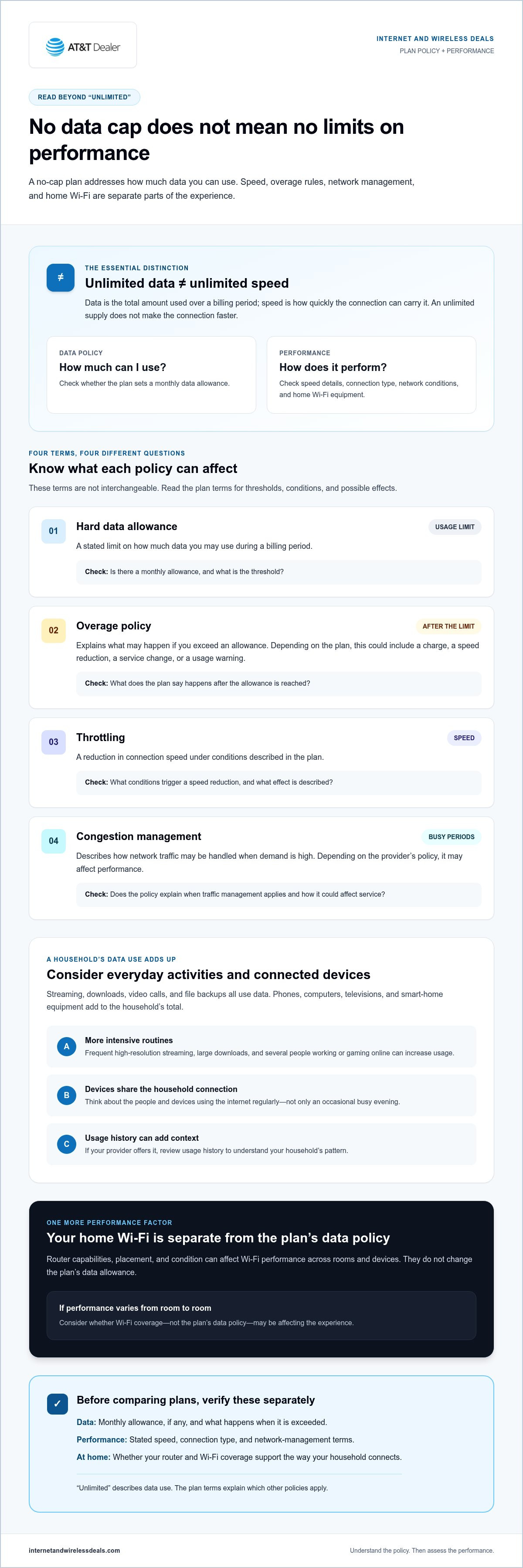
Keep four separate questions in view: Is there a monthly data allowance? Does exceeding it trigger a charge or service change? Does the plan describe network management during busy periods? Can your home equipment deliver the connection you need? A no-cap answer addresses the data allowance, not every part of the service experience.
These distinctions matter because “unlimited” describes data use, while other plan terms describe service performance. A hard allowance sets a usage threshold. An overage policy explains what happens after that threshold. Throttling refers to a speed reduction under specified conditions, while congestion management may affect traffic during periods of heavy network use. The plan terms explain which policies apply.
Equipment is another factor. Your router’s capabilities, placement, and condition can affect Wi-Fi performance across rooms and devices. That doesn’t change the plan’s data allowance, but it can influence how smoothly online activities work at home. If performance varies from room to room, consider whether the issue is Wi-Fi coverage rather than the plan’s data policy.
How a monthly data cap affects everyday home internet
Streaming video, downloading games or updates, joining video calls, and backing up files all use data. Connected devices add to the household’s total, including phones, computers, televisions, and smart-home equipment. Higher video quality, large downloads, and multiple people online at once can increase usage.
There’s no single monthly data requirement that fits every household. A home that mainly browses and checks email may use less than one with frequent high-resolution streaming, large downloads, and several people working or gaming online. Think about your regular routines and devices, not just an occasional busy evening. If your provider offers a usage history, reviewing it can help you understand your typical pattern.
Unlimited data versus unlimited speed
Data allowance and connection speed measure different things. Think of data as the total amount of water available over a month, and speed as how quickly it can flow through a pipe. An unlimited supply doesn’t make the pipe wider.
For example, a household could have no monthly data limit but still find that a large game download takes time, especially while several people are streaming or on video calls. The plan’s stated speed, connection type, network conditions, and home Wi-Fi equipment all affect performance. Check speed details separately from the data policy, then consider how the connection needs to support your household’s regular activities.
How No-Cap Internet Policies Differ from Slowdowns and Other Limits
A plan’s data policy and network-management policy answer different questions. A data allowance sets how much you can use during a billing cycle. Overage terms describe what happens if you exceed it. Throttling describes a speed reduction under specified conditions, while congestion management addresses how network traffic may be handled during busy periods. One policy doesn’t automatically tell you what the others are.
Read the plan terms for language about monthly usage, heavy use, and busy periods. Look for specific thresholds, conditions, and possible effects. Terms such as “unlimited” or “network management” alone may not explain when a restriction applies or how it could affect your household. The FCC’s Inquiry into Data Caps discusses the potential effects of data caps on consumers and competition.
- Hard data allowance: A stated usage limit for a billing period.
- Overage charge: An additional charge that may apply after the allowance is exceeded, if the plan’s terms say so.
- Throttling: A reduction in connection speed under conditions described in the plan.
- Congestion management: Traffic handling that may affect performance when network demand is high, depending on the provider’s policy.
These terms aren’t interchangeable. An overage charge relates to exceeding an allowance; throttling relates to speed; congestion management relates to network traffic. Even plans marketed as unlimited may describe management practices, so examine the full policy rather than assuming every restriction is absent. This distinction is central to finding unlimited data home internet without data caps that also fits your performance expectations.
What happens if a plan has a data cap?
Possible outcomes vary by plan. A provider might send usage warnings, apply additional charges, reduce speeds, or change service after the allowance is reached. Some plans specify a different outcome, and others may not have a monthly allowance. Before signing up, find the billing-cycle data limit and read what the terms say will happen if you exceed it, including whether a charge or service change applies.
Can unlimited plans still have network-management policies?
Yes. “Unlimited data” concerns whether a monthly usage allowance applies; it doesn’t promise identical speeds at every moment. A plan may describe how traffic is managed during congestion or under heavy use. Read those conditions separately from the data-limit terms, and note any stated triggers or effects. Don’t assume one provider’s policy applies to another plan.
Use this distinction to compare plan documents accurately: identify usage thresholds first, then review speed and network-management language. To explore AT&T internet options and availability for an address, use the AT&T internet availability tool.
How to Compare Unlimited Home Internet Plans Without Data Caps
A fair comparison goes beyond the “unlimited” label. Put each plan’s data policy, advertised speeds, connection type, fees, and contract terms side by side. Separate details stated in the offer from details that depend on your service address or order, such as availability, promotional eligibility, and the terms that apply to you.
Comparison checklist
- Data policy: Record whether the plan states a monthly allowance and what its terms say about heavy usage.
- Speed: Note advertised download and upload speeds, plus whether the offer describes them as typical or maximum.
- Connection type: Identify whether the service uses fiber or fixed wireless, since performance depends partly on the technology and conditions.
- Fees and equipment: Review equipment requirements, recurring charges, and any one-time fees in the current offer.
- Contract and promotion: Check for a contract, promotional duration, eligibility rules, and what terms apply when a promotion ends.
Keep two columns in your notes: stated in the offer and depends on my address or order. This prevents an advertised feature from being mistaken for a household-specific guarantee. Note when you reviewed the offer, too. Terms and availability can change, so comparisons are most useful when they’re based on current information.
Which connection type fits your household?
Fiber carries data over fiber-optic lines and may suit households with several people streaming, gaming, taking video calls, or uploading large files. Fixed wireless connects through a wireless network, so its real-world performance can vary with factors such as signal conditions and network demand. Neither connection type guarantees the same experience at every home. Evaluate AT&T Fiber when it’s available and its current terms match your needs. The AT&T Fiber Internet Deals 2026: The Ultimate New Customer Guide offers more detail about that option.
Speed matters alongside data policy. Download performance affects activities such as loading websites, streaming, and receiving large files. Upload performance matters for sending files, backing up photos, and sharing video during work or school calls. If several activities happen at once, consider how both directions will serve the household. Advertised speeds are useful comparison points, but review the current plan details and how the connection fits your needs.
Which plan details deserve a close read?
Search the terms for language about data allowances, heavy usage, network management, equipment, and fees. Compare the speed information with the number of people and devices likely to be online at the same time. Finally, review promotional terms carefully. Check the offer’s current duration and eligibility before factoring them into your expected service. This process helps you compare unlimited data home internet without data caps based on policy and household fit, not just a headline claim.
How to Choose a No-Cap Internet Plan for Your Household
A good choice starts with how your household actually uses the connection, not one unusually busy day. Use this process to turn everyday routines into clear plan requirements. The goal is unlimited data home internet without data caps that also fits your speed needs, policy preferences, and service address.
- List regular activities. Note who streams, games online, works or studies from home, joins video calls, downloads large files, or backs up photos. Focus on activities that happen in a typical week.
- Count connected devices and users. Include phones, computers, televisions, gaming systems, and smart-home devices. Then consider how many people are likely to be online at once.
- Set speed priorities. Think about the busiest routine period, such as one person on a video call while another streams and a game downloads. Compare advertised download and upload speeds with those simultaneous activities.
- Review plan policies. Read the data allowance wording, heavy-use terms, and any network-management disclosures. Check equipment requirements, fees, and contract conditions as well.
- Check availability and current terms. Internet options and offers depend on the service address. Confirm what’s available there before narrowing your final choices, and review promotion duration and eligibility in the current offer.
Match internet performance to daily activities
Simultaneous use is the key detail. Remote work and video calls can compete with streaming or gaming for connection capacity, while upload performance matters for calls, cloud backups, and sharing large files. Prioritize the combination your household needs on an ordinary busy day instead of choosing around a rare peak-use event. For more context on fiber performance, explore the complete guide to fiber internet speed.
Use this quick checklist as you compare:
- Everyday activities and simultaneous users
- Connected devices around the home
- Download and upload performance needs
- Data, heavy-use, and network-management terms
- Equipment, fees, contract terms, and promotion details
- Availability for the service address
Check service availability before choosing
Address matters. Connection types, available plans, and current offer terms can differ by service address, so don’t assume an option is available based on what works elsewhere. Use the site’s availability tool to explore AT&T internet options for your address, then compare the available terms against your checklist.
Ready to narrow your options? Check internet availability for your address and explore current AT&T internet choices that may fit your household.
Explore AT&T Home Internet Options and Take the Next Step
You’ve got the key comparison points: data terms, download and upload needs, connection type, equipment and fees, contract conditions, and availability at your address. Now apply that checklist to the options available to you. A plan’s “unlimited” label is only one part of the decision; current terms and household fit matter just as much.
Before choosing, write down your typical online activities, how many people use the connection at once, and which plan terms matter most. Then compare available options against those priorities. This keeps the decision grounded in regular household needs instead of a headline claim or an occasional high-use day.
- Does the current plan state a monthly data allowance?
- What do the terms say about heavy use and network management?
- Do the listed download and upload speeds fit your everyday activities?
- Are equipment, fees, and contract or promotional conditions clear?
- Is the service available at your address?
When AT&T Fiber may fit a no-cap internet search
AT&T Fiber is worth evaluating if it’s available at your address and its current terms match your household’s needs. AT&T Fiber plans include unlimited data. Review the plan details for applicable network-management language, then consider whether the available speeds and service terms suit your household’s regular streaming, work, gaming, and upload needs. Availability and the specific offer matter.
Don’t choose based on the data policy alone. Match the listed performance and terms to your household checklist, and review the details that apply to your address before signing up.
What to do when considering AT&T Internet Air
AT&T Internet Air is a fixed wireless home internet option. Its availability and terms can vary by service address, so review the current details rather than assuming its data policy or performance. Compare the listed terms with your household’s needs, including simultaneous activities and the importance of consistent upload performance. For connection-specific context, see the AT&T Internet Air 2026 guide to 5G home connectivity.
Your next step is simple: use the address availability tool to explore current AT&T internet options, then read the applicable plan terms before signing up. Check availability for your address and choose the option that best matches your household’s needs.
Make Your Next Internet Choice With Confidence
The right connection should fit the way your household lives now and leave room for routines to change. Treat unlimited data home internet without data caps as one part of that decision, not the only measure of a good fit. Before you move forward, make sure the current plan terms and service options for your address line up with what your household needs.
Your next step can be straightforward. Use the online availability checker to explore AT&T internet options for your address, review the current details, and decide whether to proceed. Internet and Wireless Deals facilitates sign-ups for AT&T Fiber and AT&T Internet Air, so you can move from researching options to taking action.
Check AT&T internet availability and explore current options. A little clarity now can help you choose with confidence and feel ready for what comes next.
Frequently Asked Questions
Is unlimited data home internet really unlimited?
Generally, “unlimited” means the plan has no stated monthly data allowance, but it doesn’t remove other service conditions. For unlimited data home internet without data caps, read the current plan disclosure for network management, speed conditions, and heavy-use language. A plan can have no monthly usage ceiling while still explaining how performance may vary during congestion. Don’t rely on the label alone; check the terms attached to the exact offer.
Can an internet plan without data caps still slow down?
Yes. No monthly usage cap doesn’t guarantee identical speeds at every moment. Advertised speeds describe the plan, while real-world performance can also depend on network conditions, your router, and Wi-Fi signal strength. For example, a device far from the router may have a weaker connection even if the internet plan itself hasn’t changed. Review any network-management disclosures separately from the data policy.
What happens if I go over my home internet data cap?
It depends on the plan. Terms may provide for a usage warning, an added charge, reduced speeds, or another service condition, but none of these outcomes applies to every plan. Find the monthly allowance and read the billing disclosure for what happens if you exceed it. If a plan has no stated monthly allowance, that limit doesn’t apply, subject to the plan’s other terms.
How much data does a household need for home internet?
There’s no single data amount that fits every home. Usage can vary with the number of people and devices, video quality, game and software downloads, and habits such as remote work or cloud backups. If your provider offers a usage history, review several billing periods to understand your normal pattern. Then consider whether a monthly allowance could restrict the activities your household relies on regularly.
Does unlimited home internet include unlimited mobile hotspot data?
No, don’t assume a home internet data policy also applies to a mobile hotspot. They’re separate services and may have different allowances, speed conditions, or usage rules. If you use a phone hotspot as a backup for work or travel, read the disclosure for that specific mobile plan and hotspot feature. Check what applies after any stated limit, rather than relying on the word “unlimited.”
Is fiber internet a good choice for a household that uses a lot of data?
Fiber can be worth evaluating if several household members stream, work, game, or upload large files at the same time. Its suitability depends on whether it’s available at your address, the plan’s download and upload performance, and its current terms. Treat connection performance and data allowance as separate factors. Compare both in the plan details instead of assuming every fiber plan has the same features.


