

A phone switch isn’t always complete when your new device activates. During an AT&T contract buyout phone switch, mixed service can last up to four hours, and SMS and MMS may take up to eight hours to work properly. Mobile data works immediately after activation.
It’s easy to focus on the new phone and overlook costs or details that can affect your switch. Before moving your number, check any early termination fee and remaining device balance, then compare the offer terms with your current bill. This guide explains which documents to gather, how to review switch offers, and what to confirm about carrier and device eligibility, so you can better understand the costs and timing.
Key Takeaways
- Review your account for any early termination fee and remaining device balance before you switch.
- Compare offer requirements, bill credits, plan terms, and trade-in conditions to understand the full deal.
- Gather your account details and device identifiers so you’re ready to transfer your number.
- Check that your carrier and phone meet the eligibility requirements for the plan or offer you want.
Checking early termination fees and outstanding device balances
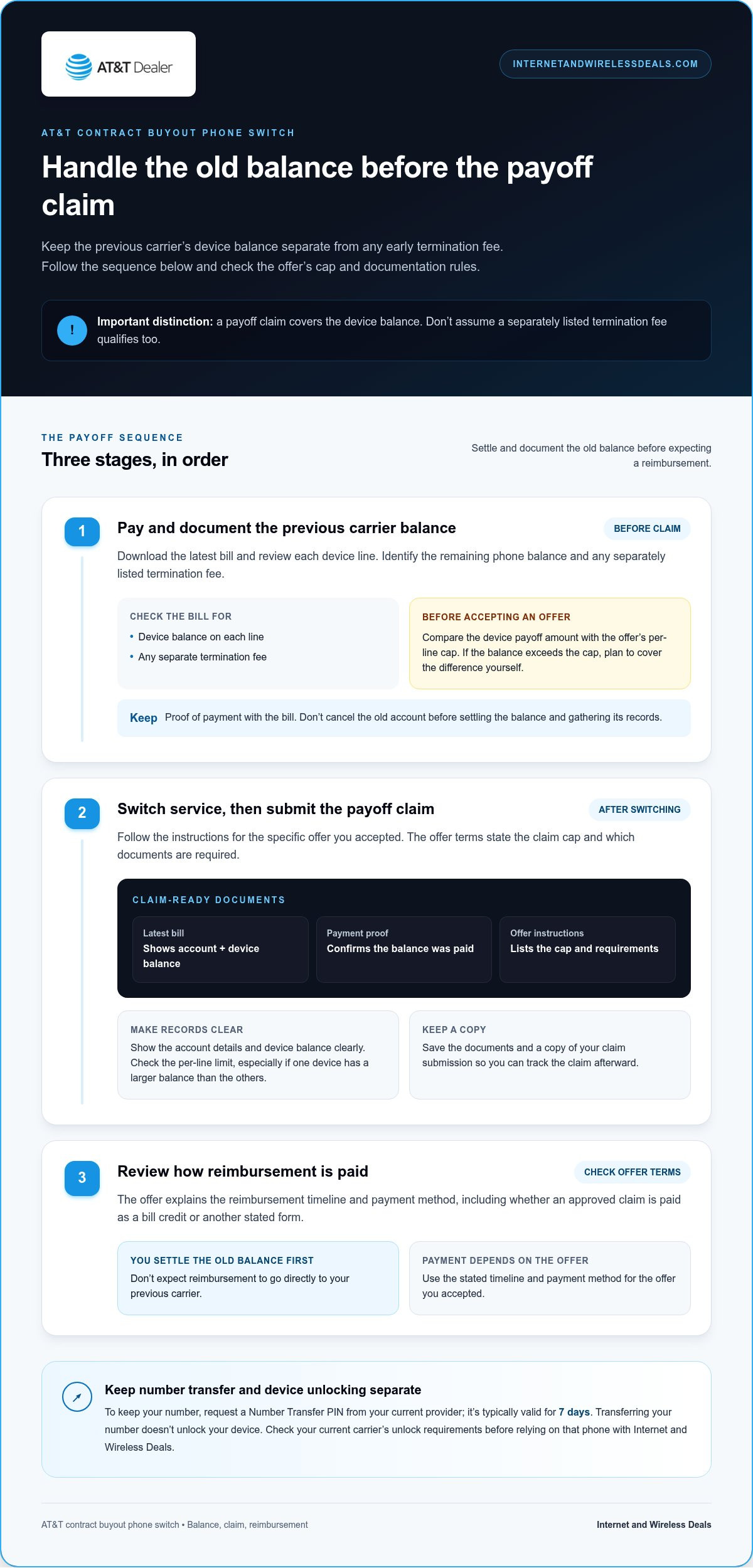
Separate the previous carrier’s device balance from any early termination fee. Check both before canceling service or accepting a switch offer.
-
Pay the Previous Carrier Balance
Pay the previous carrier’s phone balance before submitting a payoff claim. Download the latest bill and check each device line for its remaining balance and any separately listed termination fee. Keep proof of payment with the bill. A payoff claim covers the device balance, so don’t assume a termination fee qualifies too.
Internet and Wireless Deals doesn’t automatically erase your previous carrier’s balance when you switch. Reimbursement depends on the specific offer’s eligibility rules and per-line cap. Compare the cap with your payoff amount before accepting the offer. If the balance exceeds the cap, plan to cover the difference yourself.
-
Submit the Phone Payoff Claim
Switch service, then submit the payoff claim according to the instructions for the offer you accepted. Include the requested bill and proof that you paid the previous carrier. Make sure the documents clearly show your account details and device balance, and save a copy of your submission. Don’t cancel the old account before settling the balance and gathering its records.
For an AT&T contract buyout phone switch, the offer terms specify the claim cap and required documents. Review the per-line limit before submitting, especially if one device has a larger balance than the others.
-
Receive the Payoff Reimbursement
Read the offer terms for the reimbursement timeline and payment method. They explain when an approved claim is paid and whether payment comes as a bill credit or another stated form. Don’t expect reimbursement to go directly to your previous carrier. You’re responsible for settling that balance first.
To keep your number, request a Number Transfer PIN from your current provider; it’s typically valid for 7 days. Number transfer and unlocking are separate steps: transferring your number doesn’t unlock your device. Check your current carrier’s unlock requirements before relying on that phone with Internet and Wireless Deals, including for an iPhone.
AT&T switcher offers and plans
Compare the plan requirements, bill-credit terms, and coverage that matter for your daily mobile use. A phone promotion and a wireless plan are separate parts of the decision.
- Read the full offer terms before choosing a phone. Advertised phone financing can provide up to 36 monthly bill credits. Check which new line, plan, trade-in, and device conditions apply. Credits arrive over time, so compare the full credit schedule with the service commitment and your expected time on the plan. Don’t assume every line qualifies automatically.
- Match plan data to your actual use. AT&T Value 2.0 includes 5GB of high-speed data and 3GB of hotspot data. After 5GB of data usage, speeds are slowed to a maximum of 128Kbps. The plan includes unlimited talk, text, and data in and between the U.S., Canada, and Mexico. Check whether those terms suit your regular mobile habits.
- Compare coverage where you actually use your phone, not just plan names. List the places that matter, such as home, work, and your regular commute, then compare AT&T service with your current carrier in those locations. A plan’s data allowance won’t help if coverage doesn’t suit the places you rely on.
- Confirm line and device eligibility before accepting an offer. Check whether it requires a new line, a specific plan, or an eligible trade-in. Verify that your phone is compatible with the service you intend to use. If you’re considering a new 5G phone, compare its offer terms with keeping your current device. For a straightforward plan review, explore AT&T Wireless Plans and weigh the available options against your needs.
Required bill documentation
Prepare four account details before porting your number. They help identify the account and device involved in the switch.
- Gather your current carrier’s account number and billing ZIP code, plus the account password or PIN. Check each detail against your latest bill or account records. A mistyped ZIP code or account number can interrupt porting. Keep the information accessible, but don’t include passwords in screenshots unless the claim instructions specifically require them.
- Record the phone’s ESN or IMEI and match it to the correct device line. Your current carrier’s bill or account may show the device and monthly financing details. Compare the listed device balance with the amount still owed, then save the relevant bill pages. Clear records help connect the payoff amount to the phone in your claim.
- Review the offer’s active-line conditions before submitting documents. If an offer requires a line to remain active for a stated period, identify when that period begins and what could affect eligibility. Check the terms before canceling service or requesting an upgrade. Keep the qualifying line active as required, and retain records showing the line and phone number.
- Check whether the offer requires a phone trade-in, then review its device criteria. Confirm that your current phone is the device specified in the offer and follow the stated trade-in steps. A payoff claim and trade-in are separate processes, so submitting financing paperwork doesn’t necessarily complete both. Save the trade-in confirmation with your payoff documents.
Before submitting, compare the account number, billing ZIP code, device identifier, and financing details across your records. For example, a bill showing one phone while the claim lists another can cause avoidable delays. Keep copies of the documents and submission confirmation. These records will help you track the payoff claim after your number transfers.
Eligible carriers and financed devices
Check the offer’s carrier, line, and device conditions before transferring your number. A financed phone’s installment agreement and an offer’s eligibility rules are separate details to review.
- Read the specific offer terms to identify which previous carriers qualify. Don’t assume every carrier or account type is included. Match the carrier name on your bill to the offer’s eligibility wording. If your account has multiple lines, check whether each must meet the same conditions or qualify separately.
- Review the financed device’s installment agreement with your current carrier. Find the device name, line, remaining balance, and any account details on the bill. Compare them with the offer’s qualifying-device conditions. A phone balance alone doesn’t establish that a line or device meets the offer requirements.
- Check how the offer treats lines and devices before starting the transfer. Note whether it requires a new line, a particular plan, or a qualifying device. Keep each condition beside the relevant phone number. For example, if one line has a financed phone and another has a paid-off device, assess each line against the terms individually.
- Plan the order of the transfer and any account changes. First, identify the phone number and device you intend to move. Then compare the remaining installment balance with the offer’s payoff rules. Don’t end service or change a qualifying line until you’ve reviewed the conditions and recorded the details tied to that line.
Use a simple eligibility checklist for every line: previous carrier, phone number, device model, installment agreement, and offer condition. Compare each item with your bill and the offer terms. This makes differences between carriers and devices easier to spot, especially when several phones share an account. Once you know which lines and devices qualify, decide whether to transfer them together or separately.
Internet and Wireless Deals: AT&T Fiber Internet
Internet and Wireless Deals helps you explore AT&T connectivity options after reviewing your phone-switch costs and eligibility. If you’re also considering home internet, compare AT&T Fiber Internet with AT&T Internet Air. For mobile service, review AT&T Wireless Plans and available 5G Smartphones alongside your switching needs.
Use the site to check availability, compare plans, and explore limited-time discounts for broadband and 5G mobile plans. This is a useful next step if you want to review home and mobile connectivity in one place, without confusing phone payoff terms with internet-plan choices.
Visit internetandwirelessdeals.com to explore AT&T options for your home and phone.
Make your next connection decision with confidence
A phone switch can also be a chance to rethink how your home and mobile services fit together. After weighing your device and plan needs, consider whether it makes sense to review home internet options at the same time. An AT&T contract buyout phone switch is one part of the decision, not the whole connectivity picture.
Internet and Wireless Deals offers AT&T Fiber Internet, AT&T Wireless Plans, and AT&T Internet Air. Explore the options according to the connection you need at home and on your phone. A focused review can help you choose a plan that suits your priorities.
Contact Internet and Wireless Deals to explore your AT&T connectivity options and take your next step with confidence.
Frequently Asked Questions
How Long Does It Take to Switch Carriers?
The number transfer can involve a short period of mixed service. During an AT&T transfer, mixed service may last up to four hours, and SMS and MMS may take up to eight hours to work properly. Mobile data works immediately after activation. Your current carrier generates the Number Transfer PIN, which is typically valid for 7 days, so time your request accordingly.
Does AT&T offer a phone contract buyout when switching carriers?
AT&T offers a Reward Card program to help pay off a remaining phone balance when switching qualifying lines. It isn’t an automatic account payoff: Reward card redemption required. Offer conditions apply. Eligibility requirements and restrictions apply. Pricing and promotions change fast, so review current terms before deciding to switch.
What are AT&T's current switcher offers for paying off a phone installment plan?
Switcher offers may include a Reward Card for qualifying lines, while eligible phone financing promotions can provide up to 36 monthly bill credits. These are different offer structures, so don’t assume both apply to one account or line. For a payoff offer, check redemption instructions and qualifying conditions. For phone financing, review the credit period and required plan or line before accepting.
How much does AT&T reimburse for an eligible phone payoff, and what is the maximum?
The applicable offer sets the maximum reimbursement per eligible line; there’s no universal cap for every promotion. Compare the eligible device payoff with the offer’s stated limit. If the balance is higher, you’re responsible for the amount above the cap. Check whether the offer pays through a Reward Card. Reward card redemption required to use the card toward the balance.
What eligibility rules apply to AT&T switcher or phone payoff offers?
Eligibility depends on the promotion’s qualifying lines and its stated account, device, and plan conditions. Review each line separately, especially when an account includes phones with different installment agreements. A line that qualifies for wireless service may not automatically qualify for a payoff promotion. Before transferring or changing a line, make sure the phone number, device, and offer requirements match.
What documents are required to claim an AT&T phone payoff offer?
Have your current account number, provider billing ZIP code, account password or PIN, and phone ESN or IMEI ready. Match the ESN or IMEI to the device and line involved, rather than relying on the account holder’s details alone. Keep the relevant billing record accessible while completing the claim, and enter account information exactly as it appears in your carrier records.


